
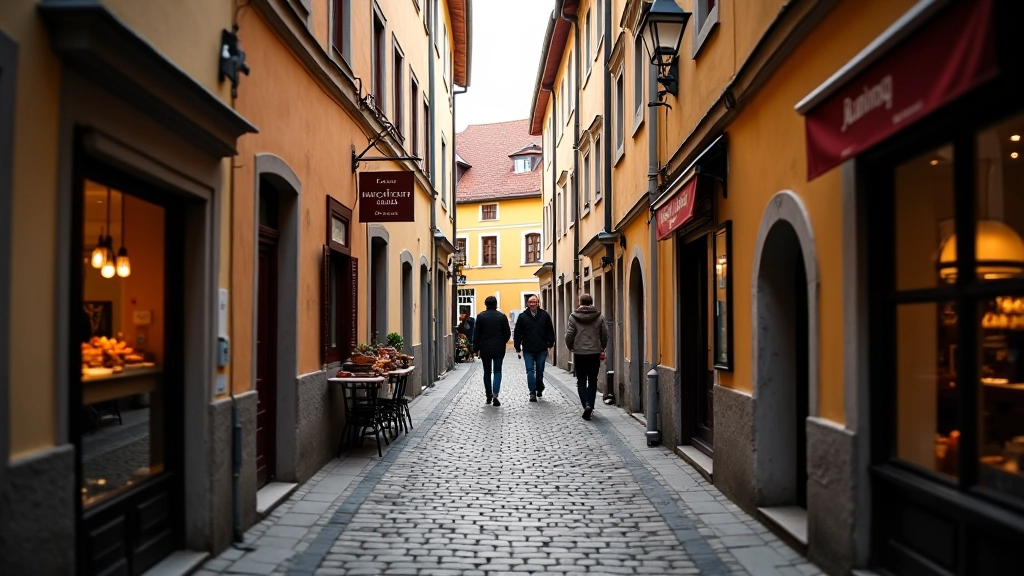

The Street Grid That Isn't One
Vilnius Old Town doesn't follow a grid. Medieval streets twist and curve, sometimes doubling back on themselves. This isn't a bug—it's intentional. The layout developed over centuries, shaped by city walls, river access, and merchant traditions. Understanding this helps you stop fighting the layout and start enjoying it.
Most visitors arrive expecting straight avenues. They don't exist here. Instead, you'll find narrow passages, hidden courtyards, and sudden openings to small squares. First time through? It feels chaotic. Second time? You'll notice patterns.
Key Streets to Remember
- Pilies Street — The main north-south spine. Widest, busiest, connects the cathedral to Town Hall Square.
- Didžioji Street — Runs parallel to Pilies, slightly quieter, has the best cheese shops.
- Aušros Vartų Street — Eastern edge, leads to the Gate of Dawn. Steep climb but worth it.
Getting Your Bearings: Three Reference Points
Don't rely on street names alone. Use landmarks instead. Pick three reference points and orient yourself around them. You'll navigate like you know where you're going, even if you've never been there before.
Cathedral Square sits at the northern edge. Town Hall Square anchors the center. The Gate of Dawn marks the eastern boundary. Everything else flows from these three points. Once you've found each one, the maze becomes manageable. You're never truly lost—you're just temporarily redirected.
Walking Times and Route Reality
Google Maps will tell you the walk from Cathedral to Town Hall is 800 meters. That's technically true, but it misses everything. The actual experience takes 15-20 minutes if you're just moving through. Add food tasting stops? You're looking at 45 minutes to an hour for what should be a 10-minute walk.
Cobblestones slow you down. So does stopping at bakeries. So does standing in small squares taking photos. Budget time generously. A cheese tasting at one shop plus a pastry from a neighbor plus browsing a bookstore means you've used up 90 minutes on three blocks. This isn't a problem—it's the whole point.
Parking: Where to Actually Leave Your Car
You can't drive into the Old Town. Streets are pedestrian-only from roughly 10 AM to 6 PM daily. But you can park nearby and walk in from multiple entry points.
The closest paid parking sits on Konstitucijos Avenue (western side) and Savičiaus Street (southern side). Both are a 5-minute walk to the Old Town edge. Street parking exists but spaces fill quickly on weekends. If you're arriving after 11 AM on a Saturday, don't hunt for street spots—head straight to the paid lots.
Apps, Maps, and When to Use Them
Google Maps works, but it'll sometimes route you down dead-end alleys. Use it for the big picture—getting to the Old Town entry point—then switch to walking and looking around. You'll spot cheese shops, bakeries, and courtyards that no app highlights.
Download offline maps before you arrive. Phone signal is reliable but you're here to be present, not staring at screens. Offline maps give you freedom. If you get turned around, pull it up. No shame in checking. Everyone does.
The Practical Route Strategy
Start at one edge, move toward the opposite edge. Don't zigzag back and forth. Pick either Cathedral to Town Hall, or Town Hall to the Gate of Dawn, or Cathedral to the Gate. One direction. This means you'll see each street once instead of twice and actually experience the neighborhood instead of retracing steps.
Small streets connect the main routes. These are where the real discoveries happen—quiet spots with just a few people, single-producer cheese counters, and bakeries that sell out by noon. Don't skip them. They're not detours. They're the actual point.
Hills, Cobblestones, and Comfortable Shoes
Aušros Vartų Street climbs steeply toward the Gate of Dawn. That's the only significant hill in the Old Town. Everything else is gentle ups and downs. But the cobblestones are uneven everywhere. Wear shoes with good support and grip. Heels are possible but frustrating. Flat shoes with traction make the experience actually enjoyable.
Rain makes cobblestones slippery. Nothing stops you from visiting in wet weather—locals do it all the time—but plan for slower movement and watch your footing on steeper sections.